CONTACT US

User login

Subscribe to the GEO E-Newsletter

A low-volume email list connecting you with our latest issues, articles and special features.

Subscribe here!

Support GEO

GEO is excited to announce that we will be re-designing our website in order to create an even more accessible, useful and dynamic resource for the work of building more just, equitable and democratic economies. Please support this work by donating today.

GEO is almost entirely a volunteer effort. Our goal is to raise $5,000 - please contribute just $10 or $25 today!

Thank you for strengthening the movement!

Unions & Worker Organizations

Organizations of and for workers, dedicated to building worker power.

Resolution No. 27: Workers' Capital, Industrial Democracy and Worker Ownership

US Steelworkers pass resolution endorsing its unionized, worker-owned cooperative development activities
| | | | | |

What should our movement look like in 2040?

Where will our movement be in another 30 years? In 2040, I will be 76 years old. Chances are, if I am still alive, I will be hopefully still be blogging (or whatever the kids will be doing in those days) but I will likely not be fully involved in the movement or physically working a 40-50 hour work week. Almost all of our current leadership will be in the same position. The current crop of  Toxic Soil Busters will be pushing 50 (like I am now). What should our movement look like in that age?
| | | | | | | | | | |

Taking the cooperative advantage to scale: 2

In the recent series on his blog, The Workers' Paradise ,McNamara is very strong on the possibility of the cooperative movement being able to move to scale.  But he wisely directs our attention to the big problems this is going to bring, problems that are already burdening cooperatives.  The primary one he refers to is “the agency problem” (which is pretty much what I mean by “top/down problem”).

| | | | | | | | | |

Honest Hope

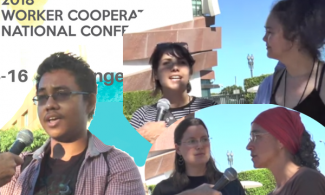
...we are coming to our national worker co-op conference sounding the theme that worker co-ops are the solution. My worry, however, is...
| | | | | | | | |

The John Logue ACE Award; other ACE Awards

The Association of Cooperative Educators established the John Logue ACE award at its 58th annual conference in Cleveland July27-30, 2010. Ohio Employee Ownership Center staff members, Bill McIntyre and Logue's wife, Olga Klepikova, talk about Logue's work, vision, "moxie" and his impact on Ohio and the U.S. Other ACE awardees for 2010 are also mentioned.
| | | | | | | | | | | | |

A BRIEF HISTORY OF COOPERATIVES IN THE PITTSBURGH AREA

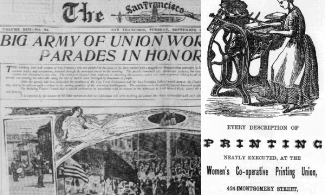
A BRIEF HISTORY OF COOPERATIVES IN THE PITTSBURGH AREA By John Curl At the time of its incorporation in 1817, Pittsburgh was already a manufacturing center, with a population of around 6,000, supplying the western region with artisanal products almost entirely made by home industry. It had become a manufacturing center during the war of 1812, when the supply of British-made goods have been cut off in the region. In 1817 most manufacturing was still done by independent self-employed artisans using hand tools. But their livelihood was already threatened by the growth of a new system that was making their economy obsolete: factories and wage labor.
| | | | | | | |

An Outline History of Cooperatives in the Bay Area and California

John Curl's history of the Bay Area Cooperative movement is eye-opening. It leaves you amazed that this country is so rich in cooperativism yet we only learn of it through John's heroic efforts. It brings to mind the saying: You need to know where you've been to know where you're going. My hope is that this history further opens up and extends our vision and our work.
| | | | | |
Syndicate content
Add to calendar

Support GEO - Buy a Printed Copies of Back Issues

GEO is a volunteer-run collective and relies on your generosity.  We make our content free but also sell printed back issues in our store - each full of of grassroots documentation from activists and innovators.  

The trailblazing GEO 8: Worker Cooperative Development Models is available in a special printed 36-page magazine format.  Buy it in our online store, or contact GEO for bulk purchases or resale

All purchases help fund GEO, a volunteer-run collective project of the Ecological Democracy Institute of North America.