Latin America

July 21, 2022

Venezuelan Cooperatives

Dario Azzellini tells Theresa Alt about Venezuelan cooperatives.

May 23, 2022

CoopCycle in Argentina

Bringing CoopCycle to Latin America is an exciting development, and one that involved cooperative federations and networks, state sponsorship, universities, NGOs, and co-op financial institutions.

March 24, 2022

Cooperative Finance in Haiti and Grenada

A report on the widespread use of formal and informal financial cooperatives by the people of Haiti and Grenada.

January 10, 2022

Lessons from Venezuela's Social Economy

Michael Lebowitz shares his perspective on the social economic models in Venezuela and Yugoslavia. Lebowitz highlights the importance of self-actualization through protagonism and how the most successful of these models focused on solidarity over self-interest.

November 29, 2021

Cuba's New Cooperative Legislation

Camila Piñeiro discusses Cuba's new cooperative legislation.

June 1, 2021

Creando Conciencia: A Cooperative Story

How the workers of Creando Conciencia formed as a worker's cooperative for recycling workers in Benavidez, Buenos Aires, Argentina.

January 18, 2021

Cooperation and Chocolate

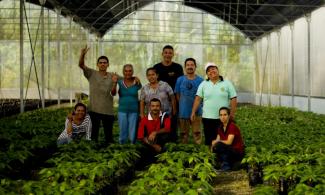
A community in Colombia is ditching traditional capitalist models in order to build a collective future.

September 9, 2019

Solidarity Economy Roads

In this chapter Razeto uses the analysis of solidarity economy developed to this point to make sense of the family as an economic unit and form of collective organization, and understand the roles of women as its main protagonists. The disintegration of the traditional family under industrial capitalism, with the rise of wage labor outside the home, the erosion of domestic and community economic activity, the creation of the nuclear family, and the concomitant changes in gender roles and the division of labor are shown to have aggravated inequality and damaged core relations of human solidarity.


August 15, 2019

Solidarity Economy Roads

This chapter offers a framework for analyzing the “ecological problem” that should be useful to those seeking to make sense of the economic aspect of the current planetary crisis. Razeto summarizes the crisis, considers the importance and insufficiency of existing approaches at the level of the State and Civil Society, and the difficulty of controlling nature and then offers a “theory of the ecological question” that focuses on the economy and its “mode of action and organization.”